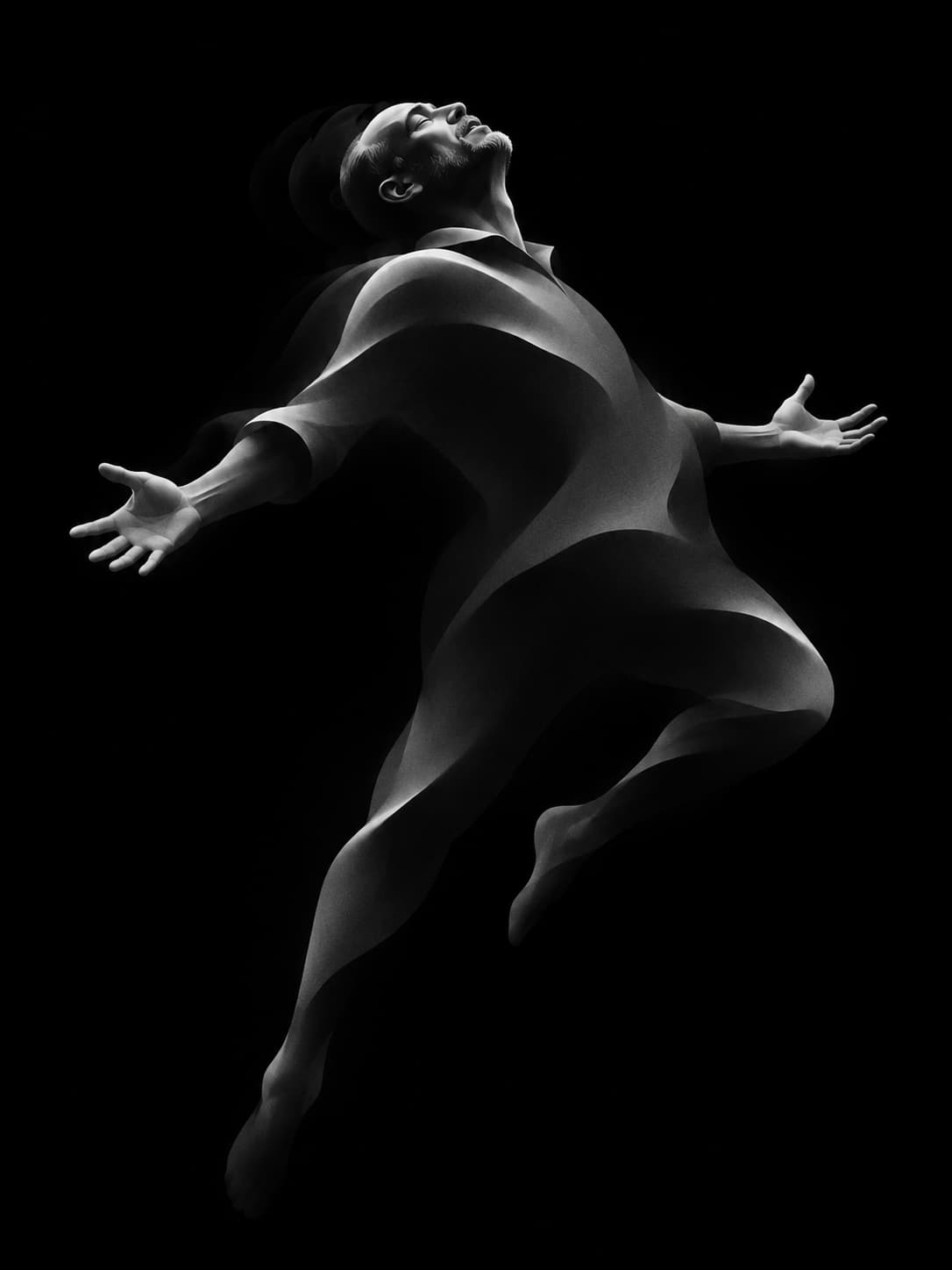
There are moments when I encounter something extraordinary and feel an almost physical reaction in my head. A painting. A photograph. A beautifully composed image. A sentence that captures an enormous truth in remarkably few words.
Something fires.
I imagine neurons lighting up, reaching across the darkness, making connections with things I have seen, read or thought about before. One idea awakens another. A memory surfaces. A question forms. Before long, what began as a moment of admiration becomes an expedition into something entirely unexpected.
I have always been fascinated by this.
Not simply by the things that inspire us, but by what happens inside our minds when they do.
A painting depicting a historical event might stop me in my tracks. I find myself studying the faces, the clothing, the architecture, the atmosphere. Who were these people? What did they believe? What happened immediately before this moment? What became of them afterwards?
Soon, I am no longer looking at a painting. I am wandering through history, imagining the world through the eyes of someone who stood there.
That impulse eventually found a home in Shadow Diaries, where historical events are explored through the imagined perspectives of those who witnessed them.
On another day, I might be listening to the news about a war. Most people understandably focus on the battlefield, the casualties, the political consequences. My mind often wanders towards the machinery behind it.
Who manufactures the missiles? Who supplies the chips, engines and guidance systems? Which companies control the technologies that make modern warfare possible? Who finances them? And what happens when industrial capacity becomes more important than battlefield ingenuity?
One question leads to another, until I find myself examining companies, industries, capital and the architecture of power.
That curiosity feeds Letters From CEO, where I attempt to understand the businesses and economic forces operating beneath the headlines.
Sometimes it is not an event but a person who captures my attention. An individual whose decisions altered the trajectory of an institution, an industry or an entire country.
I become interested in how they think. Their incentives. Their contradictions. The circumstances that shaped their judgement.
Those investigations become Sharpest Operator.
And sometimes a seemingly insignificant development reveals something much larger. A shift in technology, a political decision, a change in how an industry operates. Small movements that suggest the foundations beneath us are beginning to move.
Those observations find their way into Pressure Node.
Even football, something deeply personal to me, produces its own questions. Watching young players develop, struggle, succeed or quietly disappear from the game has led me towards G90L, an attempt to understand and illuminate the world of grassroots football.
Different subjects. Different destinations.
But the same instinct.
Something catches my attention, and I cannot resist pulling the thread.
What fascinates me is how rarely these interests remain isolated. A painting leads to history. History leads to politics. Politics leads to economics. Economics leads to technology. Technology leads back to human behaviour.
The boundaries between disciplines begin to dissolve.
Perhaps this is why I find visual inspiration so intoxicating. I am not merely admiring someone's work. I am encountering evidence of another mind making connections I had not yet imagined.
And occasionally, those connections become my own.
There is, however, a danger in all this.
It is remarkably easy to become a collector of inspiration rather than a creator of anything meaningful.
To spend hours admiring extraordinary work, accumulating references, following intellectual rabbit holes and mistaking the excitement of discovery for the satisfaction of creation.
I recognise that tendency in myself.
The mind can be endlessly stimulated while the hands produce very little.
And so I keep returning to a simple question.
What am I going to do with all this wonder?
Writing has become one answer. Designing another. Building small digital experiments, exploring ideas through interactive diagrams, creating places where seemingly unrelated observations can acquire structure and meaning.
Not everything becomes something. Nor should it.
Some encounters simply leave a trace. Others sit quietly in the mind for years before finding their purpose.
But every so often, something extraordinary happens.
An image I admired months ago connects with a passage from a book. A historical event suddenly explains a contemporary political decision. An observation from football reveals a pattern that also exists in business.
And a new idea begins to take shape.
Perhaps creativity is less about producing something from nothing and more about recognising relationships between things that already exist.
We spend our lives absorbing fragments of the world. Images, conversations, experiences, arguments, memories. Most disappear from conscious thought. Some remain.
And a few, for reasons we cannot fully explain, ignite something within us.
I suspect those are the things worth paying attention to.
Because what stirs us often reveals something about what matters to us.
And what we choose to make from it reveals something about who we are becoming.