Almost twenty years ago, when I first moved to Manchester, I was puzzled.
For a city so famous around the world, it felt surprisingly modest.
There were no forests of gleaming skyscrapers. No grand boulevards stretching endlessly into the distance. No overwhelming sense of scale. The city centre felt compact. Human-sized. You could walk from one end of it to the other in less than an hour.
That contradicted everything I thought I knew.
This was Manchester.
The city of industry.
The city of football.
The city of music.
The city whose name seemed to echo far beyond its borders.
Yet my first impression was simple.
Small.
Not insignificant.
Not unimportant.
Just... small.
And that puzzled me.
How could a city that felt so modest cast such a large shadow?
For years, that question sat quietly in the back of my mind.
It would surface unexpectedly.
Walking through the city centre on a grey Sunday morning.
Watching a Champions League match.
Reading a history book.
Learning about some invention, discovery or movement that seemed, somehow, to trace its roots back to Manchester.
Again and again, the city appeared.
The Industrial Revolution.
The first passenger railway.
The splitting of the atom.
The first stored-program computer.
Graphene.
Football.
Music.
Different stories.
The same city.
Why Manchester?

The more I learned, the stranger the mystery became.
Manchester was not the capital. It was not where governments sat. It was not where kings ruled. It was not where empires were administered.
Yet somehow it kept changing the world.
The city seemed to possess a strange ability to repeatedly place itself at the centre of important things.
Cotton.
Railways.
Engineering.
Science.
Computing.
Football.
Artificial intelligence.
It was as though every generation found a new reason to pay attention to Manchester.
Every time one chapter ended, another began.
At first, I assumed the answer lay in what Manchester produced.
The mills.
The factories.
The laboratories.
The football clubs.
The universities.
Then, slowly, I realised I had been looking in the wrong direction.
The more interesting question was not what Manchester produced.
It was what Manchester attracted.
Karl Marx was not from Manchester.
Friedrich Engels was not from Manchester.
Ernest Rutherford was not from Manchester.
Andre Geim was not from Manchester.
Konstantin Novoselov was not from Manchester.
Yet each found their way here.
Different countries.
Different centuries.
Different ambitions.
The same destination.
Manchester.
Then I realised something else.
The nature of the gravity changed.
The force remained the same.
The Manchester that attracted Engels was not the Manchester that attracted Rutherford.
The Manchester that attracted Rutherford was not the Manchester that attracted Geim and Novoselov.
The Manchester that attracted scientists is not quite the same Manchester that attracts footballers, entrepreneurs and AI researchers today.
The city keeps changing.
Yet people keep arriving.
That was when I began to suspect that Manchester's greatness had less to do with size and more to do with gravity.
Not physical gravity.
Human gravity.
The ability of a place to attract talent, ideas, ambition, capital and curiosity.
Great places are not measured by what is born there.
They are measured by what they attract.
Once I started looking through that lens, I began to see the pattern everywhere.
Not just in Manchester.
Across history itself.
More than a thousand years ago, a young scholar left Bukhara in search of knowledge.
His name was Imam Bukhari.
He crossed deserts, travelled vast distances and spent years collecting narrations, verifying sources and learning from teachers. Sometimes he would travel extraordinary distances to investigate a single report.
I often return to one image.
A man crossing a desert for a single narration.
Pause and think about that.
A single narration.
Today, I can sit in Manchester with a cup of coffee and a phone in my hand and learn about Imam Bukhari within minutes. I can trace his journeys, study his teachers, locate Bukhara on a map and read about events that happened more than a thousand years ago.
I crossed no deserts.
Yet I can follow in his footsteps.
The technology has changed.
The curiosity has not.
And perhaps that is the point.
Imam Bukhari was not really travelling towards information.
He was travelling towards gravity.
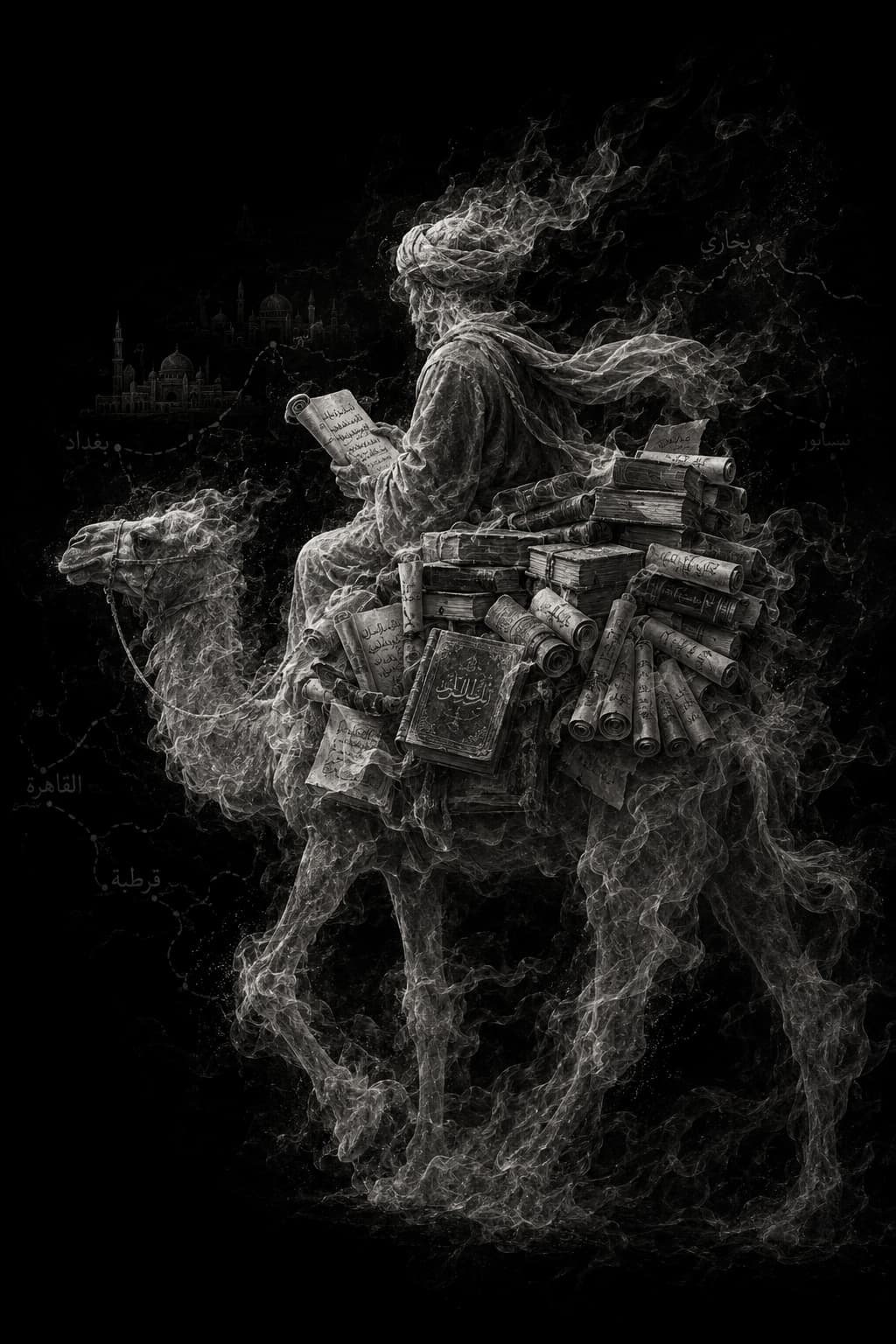
Knowledge had accumulated in certain places. Certain teachers possessed knowledge that could not be found elsewhere. Certain cities became centres of learning.
Bukhara.
Baghdad.
Cordoba.
Cairo.
People travelled extraordinary distances because something valuable had accumulated there.
Knowledge.
The gravity was invisible.
The effects were not.
The same pattern appears throughout history.
Athens attracted philosophers.
Florence attracted artists.
Oxford attracted scholars.
Silicon Valley attracted entrepreneurs.
Manchester attracted builders.
Different places.
Different eras.
The same force.
Gravity.
The longer I lived in Manchester, the more I realised that the city's greatest achievement was not any single invention, industry or institution.
Its greatest achievement was repeatedly becoming a place where talented people wanted to gather.
A place where ideas collided.
A place where ambition found momentum.
A place where curiosity was rewarded.
Perhaps that is why Manchester keeps reinventing itself.
When one industry fades, another emerges.
When one era ends, another begins.
The gravity remains.
The destination changes.
And that brings us to the present moment.
Artificial intelligence.
The newest gravity well.
Researchers are moving towards it.
Investors are moving towards it.
Companies are reorganising themselves around it.
Students are choosing careers because of it.
An entire generation is being pulled towards a new centre of gravity.
Yet even here, Manchester quietly appears in the story.
William Stanley Jevons spent part of his academic life in Manchester. He became famous for an observation that later became known as Jevons Paradox: increasing efficiency often increases demand rather than reducing it.
Coal powered the nineteenth century.
Intelligence may power the twenty-first.
The more abundant intelligence becomes, the more we seem to want of it.
That is Jevons Paradox.
For years, people assumed computers would reduce the need for computation.
Instead, we demanded more.
Then came the internet.
We demanded more.
Then smartphones.
More again.
Now AI.
The pattern repeats.
We do not use efficiency to consume less.
We use efficiency to expand our ambitions.
And somehow Manchester sits quietly in the background of that story too.
Not only because of Jevons.
But because the lineage of modern computing traces back to the first stored-program computer built here.
The city that helped mechanise labour may also have helped lay the foundations for the mechanisation of intelligence.
I often think back to my first impression of Manchester.
A small city.
A walkable city.
A city that seemed almost too modest to have changed the world.
Twenty years later, I think I finally understand what I was missing.
I was looking at buildings.
I should have been looking at trajectories.
The greatness of Manchester was never its size.
It was its gravity.
The ability to attract people, ideas and ambition from elsewhere, then give them somewhere to collide.
The longer I think about it, the more I realise that curiosity works the same way.
It pulls scholars across deserts.
Scientists across continents.
Entrepreneurs across oceans.
Ideas across generations.
And sometimes it keeps a question alive in the back of someone's mind for twenty years.
Why does Manchester matter so much?
Perhaps the answer was gravity all along.
And perhaps gravity begins with curiosity.